Friday, 29 November 2013

Holy Grail No.2 - Argentina 86 Home Shirt

The first ever article that appeared on the Attic was billed as “Holy Grail No.1”. The numbering would clearly suggest that this was perhaps the first in a series and to that, I would say that yes, it was…I just never quite got round to writing about no.2. Until now!

So sit back and wallow in what will turn out to be yet another tale of obsession and ultimate futility!

It’s 1986 (really? What a surprise!) and the 11 year old me is standing in Devlins’ newsagents, unsure as to whether he should spend 42p of his 50p pocket money on what would be his first ever copy of Shoot! In the end, he / me / I buy / buys it, drawn by the World Cup Review inside, the cover of which features Maradona cradling the inspiration for Holy Grail No.1.

It’s possible that my obsession with football kits in general was started by my love of Maradona’s shirt, but whether that’s true or not, it certainly captivated me at the time. It’s hard to say what exactly I loved about it, but I distinctly remember being impressed that the middle stripe was white and not the usual blue. Moreover I loved the holes! This wasn't just an aertex thing, t-shirts at the time were made from what was known as ‘tea bag’ material – I had a lovely camouflage one…and later some fetching Y fronts with tea bag (settle down) inserts…


I was aware of course that replica shirts were available, but such was my naivety and newness to football, I had no idea that my local Intersport wouldn't stock such an item. Never mind the fact the Falklands war and the Hand of God made the possibility of seeing an albiceletse shirt in ANY sports shop in England virtually nil!  Having confirmed the unavailability of said artefact and this being pre-internet days, I scoured the ads in the now purchased Shoot! and once again drew a blank.

In the coming years, I would religiously check every available sports shop or ad I could find and always got nowhere. I seemed destined to never obtain any of my holy grails. As time wore on, I realised that Argentina would surely be changing their kits for the World Cup due in 1990 and sure enough, when Maradona et al stepped out at the San Siro against Cameroon, they had indeed changed their outfits…and what an abomination they were! The blue stripe was now firmly back in the middle of the road and above it some kind of comedy V neck from the late 70s! With heavy heart I accepted the beauty of that Le Coq Sportif shirt was gone forever.  Looking back at old magazines of the time, it seems you could buy a version of this shirt, but I just didn't care for it.

Sorted! Respect Due!
By USA 94, a decent design once again adorned the AFA squad, but also, once more I could find nowhere that sold one! I’m sure it may have been available from a mail order outlet somewhere, but I never managed to find one and so it fell to Score Draw to provide me with my first ever Argentina shirt the following year. OK so it was an unofficial one and it had wide stripes (with the blue one in the middle), but it was only £19.99 and by now I just wanted something!

My first proper AFA shirt would be in my possession a mere 12 months later with the beautiful 96-97 design. I’d seen a slightly different version at the Atlanta Olympics earlier in the year and had loved it on sight! And now, finally, I had my very own Argentina shirt!!! I still didn't have a 1986 one though…
By the time eBay was a part of my life, I’d trebled my collection by purchasing both the home and away World Cup 98 shirts. I would have had even more but the AFA selected Reebok as their supplier for some godforsaken reason and the designs they produced were possibly the worst ever seen - the WC06 one gives them a run for their money!

1990...sort of...
It’s now 2003 and the 28 year old me has discovered the joys of eBay! What a great way to spend money!!! The first obvious search is for Argentina shirts and straight away there was a whole load of 86 shirts available wasn't there? Of course not!!! There was a whole load of Reebok crap, a bunch of 2002 shirts and some 1990 ones (the ones with the plain neck) available, but nothing of any real…oh hang on, what’s this???  A 1990 shirt, but this one has the 2 blue lines in the neck just like the actual shirts at the time did!!! My first taste of eBay last second bidding success and £57.50 later and I was a happier man. Yeah I know the badge isn't right and it too should have holes...that's for another time...

Still, there was that emptiness inside, a holey-shirt shaped hole. Surely eBay was my best bet? Over the next 12 months I saw a few gems, all way out of my price range of course. I even saw a shirt from the Eng V Arg Mexico 86 ¼ Final, but I think the list price was around the 5K mark. Around this time, I began to realise that it was almost certain that proper replicas were never produced, meaning ultimately that if I was ever to obtain one, it would have to be player worn and given I had a child and a mortgage by now, that was obviously not going to happen.

This left me CRESTfallen
So…where did that leave me?  Pretty much without hope…until suddenly there started to appear newer retro shirts…proper looking ones too! Well, almost…3 different versions appeared. One had a sort of tea bag material, but the badge just had ‘86’ on it instead of a proper AFA one. Another had a proper badge, but was bereft of holes. The third was the worst of both of those…86 badge and no holes! Nevertheless, they were better than nothing and I promptly ordered one each of the former two. There were also some away shorts appearing as well with again, several different versions, none of which quite got it exactly right!

Would someone PLEASE make one with a decent badge and some holes??? Was it too much to ask??? Would I ever get my Holey Grail??? HA!

Finally!
The answer would come only a few weeks later. On a cold November day (I assume it was cold, it was November), I chanced upon yet another 86 retro shirt, which were by now, quite common. It looked slightly different though. I checked it out and…OMG, HOLES!!!! And a proper badge!!!! Not only that, but the material was decent quality and the holes were…well, proper holes!!! Not like the other one I had which just had…the wrong holes (oh come on!). The one slight issue was the price. I think there were 2 available, a medium and a large and both were on for 140 euros…approx £100 (the seller was in Switzerland).  I contacted him and managed to agree a price of 99 euros, which made it a total of £83.46. It was the most I’d ever spent on any shirt by a long way (well, by £25.96), but it was entirely worth it!

A week or so later and it was mine! Oh happy day!!! I had found peace at last…weeeeelllll. You should know me better than that. While it was as near perfect as I could possibly hope to get without hunting down an original squad member, it wasn't quite right…yes it had holes, but they weren't as large as the actual shirts. And the neck wasn't perfect…and the badge etc etc…

The "right" holes
As such, I still continue my hunt, which led me to purchase this 1989 beauty earlier this year. Yeah the badge is a bit high and it’s not an 86 one, but look at the holes…

JUST LOOK AT THE HOLES!!!!

I need help…

Saturday, 23 November 2013

Focus On... Giles Metcalfe

A familiar face to football nostalgia fans on Twitter, Giles Metcalfe becomes the latest person to step into the spotlight as The Football Attic finds out just what makes football fans tick...

Full Name:
Giles Metcalfe

Current blog/podcast(s):
No Standing

Birthplace:
Northallerton, North Yorkshire

Birthdate:
17 February

Height:
6 ft 3 in

Giles Metcalfe
Married:
Engaged to Ailsa

Children:
Step-children James and Abbey

Car:
2004 Ford Ka

Favourite blogs/podcasts:
Football Attic; Got, Not Got, The Goldstone Wrap, Two Unfortunates, No Clash of Colour, A United View on Football

Team(s) supported:
Bolton Wanderers, England, Bradford Park Avenue, Brighouse Juniors

Favourite football player ever:
Pelé

Biggest thrill while blogging/podcasting:
First time Football Attic and GNG published my stuff

Biggest disappointment while blogging/podcasting:
Scammers and rip-off merchants promising the moon on a stick

Pelé
Pelé
Best countries visited:
USA

Favourite food:
Roast Beef dinner

Miscelleaneous likes:
Football, coats and jackets, trainers, shoes and boots, vintage and retro stuff, the 60s and 70s, Italian scooters, Mod, watches

Miscellaneous dislikes:
Ignorance, prejudice, football hooliganism, liars and cheats, DIY

Favourite TV shows:
MOTD, The Football League Show (if Bolton have won), TOTP 78 (if post-punk bands on)

Favourite actors/actresses:
Michael Caine, Julie Christie, Clint Eastwood, Liam Neeson, Bruce Willis, Phil Daniels

Favourite musicians:
Doves, The Jam/Weller, Small Faces, The Who, Neil Young, The Byrds, Love, Shack, Jake Bugg

Best friend:
My partner, Ailsa

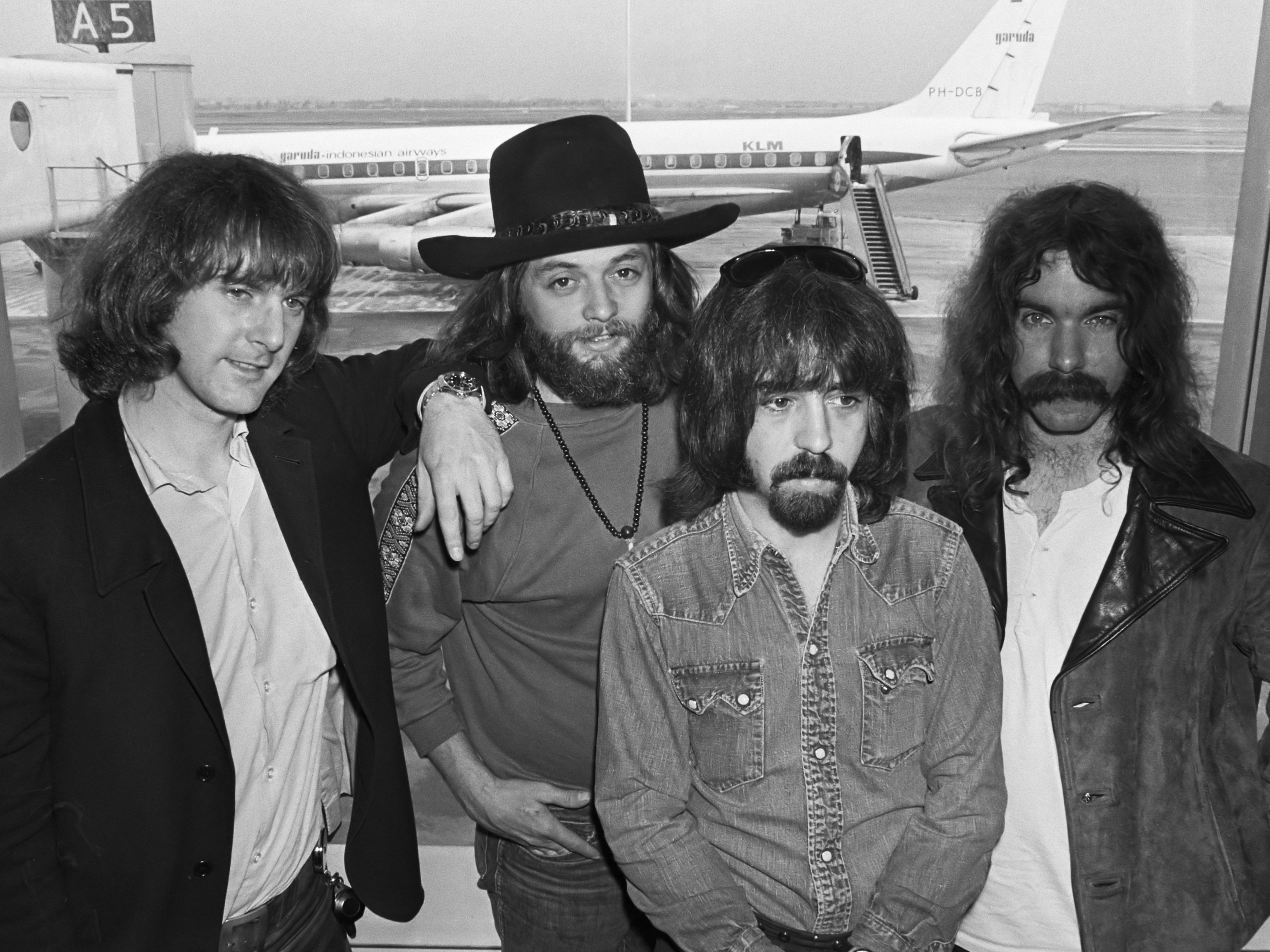
The Byrds (1970)
The Byrds
Biggest drag in blogging/podcasting:
Not getting published (hence set up my own blog)

Personal ambition:
To be discovered as a writer/blogger, play for BWFC

If not in your current career, which job would you do?
Football writer/journalist/astronaut

Which person in the world would you most like to meet?
Pelé

Favourite activity on a day off:
Sleeping, jacket or trainer shopping, blogging

Our grateful thanks go to Giles Metcalfe for contributing to our Focus On feature, and don't forget, if you've got a football blog, podcast or other project, you can take part too. Just visit our info page and fill in all your details - we look forward to hearing from you!

Previously in Focus On:

(Image of Pelé by Ricardo Stuckert/PR [CC-BY-3.0-br (http://creativecommons.org/licenses/by/3.0/br/deed.en)], via Wikimedia Commons. Image of The Byrds by Joost Evers / Anefo (Nationaal Archief) [CC-BY-SA-3.0 (http://creativecommons.org/licenses/by-sa/3.0)], via Wikimedia Commons)

Wednesday, 20 November 2013

Football and Comedy: The Fast Show (1994)

People often say 'Art imitates life', but it's just as true to say that comedy imitates football. A perfect example can be found among the three series of The Fast Show, a BBC TV series that contained more than its fair share of football references.

Here we see a short sequence from one episode that features Chanel 9 Neus, a pseudo-Latin American TV programme that doesn't allow paltry production values to get in the way of some truly awful broadcasting.

On this occasion we're treated not only to the usual shambolic news bulletin one would expect from Chanel 9 but also a sports report containing the latest football results from the land of El Presidente.


Here are a few things to look out for...

0:05
The opening titles for Chanel 9 Neus. For some reason, I always found it deeply amusing to see a piece of meat being hacked with a cleaver alongside more generic current affairs imagery. Perhaps it was just me...

0:21
Poutremos Poutra-Poutros (played by Paul Whitehouse) bids us a warm 'Bono estente' and the usual job of trying to identify as many random English cultural references in the dialogue begins.

0:30
Co-presenter Kolothos Apollonia (Paul Shearer) joins in with the brilliant line: "Aknopo dopra filla Whiskas - fullameatygoodness."

0:40
Apollonia: "Obrigado TIP I say Foghorn Leghorn."
Poutra-Poutros: "I say I say I say BOY!"

0:56
First football reference: the oft-mentioned Chris Waddle.

1:08
A short 'Presentation Commerciale' for the very reasonably priced 'Cielyn Gizmo'.

1:27
Sporto! (mia specifica Foota...)  Time to go across the studio to visit Antonios Gubba (Simon Day) who has all the final scores from Section Una.

I love the fact that all the matches finished 0-0 with the exception of one that was abandoned due to 'violencia'. As for the team names, each one is a joy to behold, my favourite being Bombo Chipolata. Strangely a Liverpool-supporting schoolfriend of mine could never pronounce 'Borussia Mönchengladbach' when he was very young and always said 'Munchen Brunchen Gladback' as an alternative. Perhaps that's where The Fast Show got it from...

2:25
"Antonios... Mentale!"

2:34
No visit to the Chanel 9 Neus studio would be complete without a bit of 'Heth-eth-eth, eth-eth-eth-eth-eth...'

2:42
The bulletin ends with Poula Fisch giving us one of her customary weather report. Who'da thought... SCORCHIO!

3:30
As Antonios Gubba blows his whistle for the final time, we say Boutros Boutros-Ghali to Chanel 9 Neus, but this won't be the last visit to The Fast Show for our 'Football and Comedy' series, of that you can be certain....

Previously in 'Football and Comedy':

Friday, 15 November 2013

Panini 2002 World Cup Album


We at the Attic don't just write about our own experiences of football nostalgia, we also like to be a conduit for others...here Victor M Rey shares his memories of his first ever Sticker Album...

The 2002 World Cup is the first football championship I remember, but if there is something that I remember better than the World Cup itself it is the Panini Sticker Album.

I was 7 and I was living in Venezuela. Despite Venezuela has never played a World Cup, the people followed the football, specially their parents/grandparents' country football team, like Spain (this is my case), Italy, Portugal... And most of the children had the Sticker Album.

Everybody in my class had the album, we changed between us our repeated stickers in order to have the maximum number of stickers possible.

Regarding the album, the first pages talk about old World Cups, the countries who have won it and stickers with the photos of the stadiums in Korea and Japan... and some pictures of the 2002 WC pets!

The rest of the pages were, as usual, dedicated to the participant countries. Each page has the country's logo, name in some languages (English, Spanish, Italian, Portuguese, German...) and a photo of their main line-up. It has something curious, it is that some countries, instead of a line-up, their had a picture with the head of the players (I used to joke with my friends saying they hadn't enough money to pay for the photo). The rest of the page has the photos of the players, with their city of birth, age, weight and height.

The pages that belong to the countries of the last group (like Russia) has fewer stickers, because each sticker has the photo of two players, a really interesting thing.

I remember I spent all my summer trying to get all the stickers. I had around 10 stickers left, so my father helped me calling Panini in order to complete the album.

It was the first football sticker album I completed by myself, and I remember it with great emotion.

Thanks to The Football Attic for letting me share my experience.

Huge thanks to Victor for sharing his sticker album memories there...if you'd like to share anything from your past (preferably football nostalgia related, we're not licensed therapists!), drop us a line and let us know to admin [at] thefootballattic [dot] com...

1994: Football of the Future

The year is 1984. Charlie Nicholas is the poster boy of British football, Bryan Robson and Ray Wilkins share the British transfer record and players everywhere are earning more money than they've ever done. Where would it all end, or more specifically, what would football be like ten years hence in 1994?

That was the question Shoot! magazine asked 29 years ago, and to find the answer, it assessed the state of the British game at ten-year intervals leading up to 1984.

"Stanley Matthews was on £15 a week in the winter and £12 a week in the summer in 1954" said Shoot! as if to reinforce the stereotypical view of post-war austerity in Britain. "Blackpool, then in the First Division, carried a staff of 39 full-time professionals and their weekly wage bill for players was not more than £650... The terrace admission price was 1s 9d (8.40p). Match programmes cost twopence (0.75p)."

It all sounds like chicken feed by today's standards. The biggest British transfer back then was the £30,000 Tottenham paid Aston Villa for Danny Blanchflower, and even that was exceptional given that most players were still going to training sessions either by bus or bicycle because they couldn't afford a car.

Ten years on and Jimmy Greaves was the star of the day, earning £60 a week, while Tottenham had a wage bill of £2,500 for its staff of 35 people. Match day programmes would have set you back one shilling while five shillings would have got you a place on the terraces to see the match. As for the biggest transfer deals, the bar had been raised to £116,000 following Denis Law's move from Manchester United to Torino in 1962.

And so it went on with monetary comparisons made for 1974 and 1984, the year when this Shoot! article was published. All very interesting too, but one has to wonder how all these values equated when inflation was taken into account. What could Stanley Matthews have bought with his weekly wage of £15 and how much is it worth in real terms from a modern-day perspective?

As ever, The Football Attic intended to find out, so what follows is a series of graphs that show the changes in value for each of Shoot's main criteria based on their 2013 worth. Also shown on the graphs are the predictions made by the magazine as to what values they expected to see in 1994 (more of which later), plus the real values for 1994 and the years that followed.

Weekly Wage For a Top Footballer

Click for larger view

Having heard that Stanley Matthews earned £5 per week during 1954 and Jimmy Greaves earned £60 per week in 1964, Shoot! went on to explain that West Ham's Bobby Moore picked up the equivalent of around £230 per week during 1974 - the equivalent of £2,038 per week in today's money. "He drove a Jaguar and his wife had a sports car and they lived in luxury in a magnificent house called Morelands," Shoot! went on to say.

As for Charlie Nicholas, he was raking in £2,400 per week in 1984 while at Arsenal - over £6,500 per week by today's standards. "If football earnings continue to increase at the same rate as in the last 20 years" said Shoot back then, "a top First Division star in ten years time can look forward to netting around £30,000 a week!" As it is, that figure turned out to be nearer £10,000 per week in 1994, but that was nothing compared to the £50,000 per week that Javier Hernandez was earning at Manchester United in 2012. Using the Mexican as a randomly chosen top player of the era, his weekly earnings were far greater than even Shoot! could have predicted.

Top-flight Football Match Ticket

Click for larger view

Paying one shilling and ninepence for a ticket to see Stanley Matthews in 1954 was the equivalent of paying just over £2 in today's money - a bargain whichever way you look at it. A decade later you'd have been paying double that, and in 1974 you'd have been paying the equivalent of £6.62. Curiously the real cost of a ticket for Highbury in 1984 was slightly less than the 1974 equivalent.

In 1984, Shoot! magazine was predicting that a ticket for a match in 1994 would cost as much as £25 - that's £68 in current terms. This turned out to be a big over-estimate as the real value was just under half-that, but it's true that ticket prices have continued to rise dramatically. The cheapest ticket for a match at White Hart Lane this season currently stands at £37.

Match-day programme

Click for larger view

It can be argued that today's match-day programmes offer much more content and higher production values than the offerings of 1954. Even so, the tuppence you'd have paid for one back then - 15p in today's money - still seems paltry.

The cost of a programme was up considerably come 1964, although the cost remained relatively constant right up to 1984 when it was worth just over £1 in 2013 terms. That, however, didn't stop Shoot! predicting that in 1994 "match programmes will cost £5." You'd have actually paid around £1.50 back in 1994 (£2.53 today), whereas a guide to the match at Stamford Bridge in 2013 will still only set you back £3.

Highest British Transfer Fee Involving a British Player

Click for larger view

You hardly need us to provide a graph to tell you how much transfer fees have sky-rocketed over the last few years. Gareth Bale's £88.5 million transfer from Tottenham to Real Madrid in 2013 dwarfs any previous transfer involving a British player, even taking inflation into account.

Just for once, Shoot! was almost spot on with its prediction that in 1994 the record transfer fee would be £5 million. In 1992, Paul Gascoigne moved from Tottenham to Lazio for £5.5 million - the equivalent of £9.6 million in today's money. Ten years further on, Rio Ferdinand's move from Leeds to Manchester United resulted in £29.1 million changing hands (2013: £40.1 million).

Shoot! Magazine

Click for larger view

Looking ahead ten years on from 1984, Shoot! predicted that it would cost £3 in 1994 "and it would continue to be the best read in football." Modesty aside, the magazine actually costed 70p in 1994 (£1.18 by today's values) and was still only £1.80 when its final issue was published in 2008 (2013: £2.03).

Shoot! cost just one shilling when it was launched in 1969 and its value in modern terms barely changed over the next 15 years, costing 8p in 1974 and 33p in 1984.

Poking fun at the past

If you're not now reeling from the statistical tidal wave that's just hit you, we end with a little light relief.

As anyone that used to watch Tomorrow's World will tell you, long-range forecasts can sometimes prove hilarious with hindsight. Such is the case as we look at Shoot! magazine's predictions for what football would be like in 1994.

"We at Shoot have been looking into our crystal ball and forecast that in 1994 there will be a British Super League with Celtic, Rangers and Aberdeen joining nine elite clubs from England." So far, so wide of the mark. "Liverpool, Manchester United, Arsenal and Spurs are the English clubs likely to lead the revolution, with many of the smaller clubs either going to the wall or surviving with staffs of part-time professionals." Now we're getting somewhere...


"Synthetic pitches - with the infamous bounce controlled - will be commonplace," it proclaimed, "...and most major clubs will carry a sponsors name in their title, for instance GUINNESS RANGERS at Shepherd's Bush [QPR]." If only - the thought of seeing CARDIFF MALAYSIA would surely have been a sight to see...

It continued: "Matches will be played on summer Sunday evenings, and there will be one televised match every Saturday... There will be no standing on the terraces at British Super League matches because the grounds will be all-seaters." A virtual bullseye there, although Shoot! may not have predicted the reason for the changes in the first place.

With a final glimpse to the future, we see the illustration of two players on what we assume is a synthetic football pitch wearing sponsored shirts, elbow pads and full length gridiron-style pants instead of shorts. Though most of Shoot's predictions turned out to be hopelessly wrong, we're glad to see that this one wasn't any different.

(Inflation calculations courtesy of This Is Money)

Thursday, 14 November 2013

We Are 2!

Two years ago today, the Football Attic cranked open its dust ridden hatch and let down the ladder of nostalgia for you all to climb up and sample our aged goodness... this analogy really isn't working is it?

Never mind that, it's our birthday!!! To celebrate, let's get all meta and be nostalgic about nostalgia! So come with us as we take a journey through our short lifespan...

14th Nov 2011 - We are born and the world instantly becomes a better place!

18th Nov 2011 - Our first proper post...Rich bangs on about a shiny piece of plastic

15th Dec 2011 - Chris writes something about Ceefax and the Attic explodes!

6th Feb 2012 - The Football Attic graces Twitter with its presence - the world is never the same again!

14th Mar 2012 - The Football Attic Confessional is launched.... and quickly forgotten ;-)

30th Mar 2012 - The League of Blogs is founded

23rd May 2012 - The League of Blogs Wallchart is complete!

4th July 2012 - The first Attic publication, the League of Blogs Sticker Albums are created!!!

10th Aug 2012 - The first Football Attic Podcast is recorded, covering the subject of Panini

30th Aug 2012 - Nearly a year after we came into being, Rich finally accepts Facebook exists and we join.

7th Sept 2012 - Rich's 5 Worst Subbuteo Items finds itself on the Guardian's 'five things they liked that week.'

28th Sept 2012 - The first Great Tracksuit Of Our Time makes its debut.

14th Nov 2012 - Our 1st Birthday!

16th Nov 2012 - The Greatest Shirt Sponsor Ever tournament begins!

1st Jan 2013 - WANG!

5th Jan 2013 - Our 2nd book, the Football Attic Annual sells out and goes worldwide! ;-)

22nd Feb 2013 - Re-e-brand!

10th Mar 2013 - Chris creates a Subbuteo wallchart as it would have been in 1900


31st Mar 2013 - The League of Blogs returns!

5th Apr 2013 - We make our first appearance in Backpass Magazine

30th Apr 2013 - The vote for the Worst of Modern Football begins - won by "Greed in general"

21st May 2013 - What was England's Greatest Ever Kit? 'England 82', apparently...

7th Aug 2013 - We take a look at the trends in kit manufacturing

4th Nov 2013 - Numbers on the back of shirts is so passe...

14th Nov 2013 - We are 2! Oh yeah... we covered that...

So what's set to grace the Football Attic pages over the next two years? Well we've got a podcast coming up very soon and before you know it it'll be time for the League of Blogs 2014!

Of course we couldn't have made it this far if it wasn't for you lovely people who bother to read our ramblings or engage with us on Twitter, etc, so a huge thank you to all who've dropped by and liked what you've seen and of course an even bigger thanks to all those who have contributed articles to the Attic.

THANK YOU! :-)

Rich & Chris

Monday, 4 November 2013

Wrong numbers?

Football is a game of numbers. Scorelines feature numbers, league tables feature numbers, Gareth Bale's bank balance features numbers (quite a few, actually). Perhaps the most important numbers, however, are those featured on the backs of the shirts worn by the players. Shirt numbers have been around since 1928 and though they've been somewhat crowded out by sponsor names, player names and all manner of other paraphernalia, they remain an important feature of any football shirt.

The future might be bright, but it didn't feature shirt
numbers on the front for Halifax Town
These days, you'll also see numbers on the front of the shirts when there's a major international tournament taking place, the World Cup adopting that idea in 1994. This wasn't the first time it had been tried, however. Halifax Town were pioneers of the 'number on the front' way back in 1971 when they played in the Watney Cup competition against the likes of Manchester United and West Bromwich Albion. Halifax, sporting a recently introduced kit of orange shirts and blue shorts, looked a little peculiar as they tried to set their numerical trend, and predictably enough it didn't seem to catch on to any great extent.


Francis Lee adopts the gridiron look in November 1972.
Similarly, a variation of the theme also failed to stick beyond the 1972/73 season when Manchester City wore a change strip featuring numbers on the shirt sleeves. Looking more like an American football shirt, these numbers looked good enough alright, but perhaps were a little ostentatious. On a more practical level, it begs the question "Where's a number best located?"  Presumably shirt numbers are used mostly by the ref for disciplinary situations when identification of a specific player is most important. Having a number on both sleeves, however, seems slightly excessive, one could argue.

Kenny Dalglish celebrates numbers on shorts during
the 1973 Scottish Cup Final.
Of course numbers aren't just confined to the football shirt. Numbers on shorts are not uncommon, and for a twist on that tradition, one need only look to Celtic who for many years wore numbers not only on the front of the shorts but on the backs too. The fact that they wore numbers on the shorts at all came about because (if Wikipedia is to be believed) Robert Kelly, former chairman of the club, couldn't bare to see the famous green and white hoops obscured in any way shape or form, so onto the shorts they went.

Billy Bremner looks for someone to hug that also
loves blue sock tags.
The last bastion for number wearing, it seems, is on the socks. When it comes to that piece of apparel, there was only one team setting a trend back in the 1970s, and that was Leeds United. Don Revie's team raised a few eyebrows in the early part of the decade when they were seen sporting blue tags that were stitched into the socks complete with player numbers and frilly white tassels. Another example of style over substance, it was nothing if not original but ultimately added to the cannon of trends that never quite caught on.

Middlesbrough v Coventry 1974: Too clever by calf
The same can be said of Middlesbrough who certainly showed just as much creativity with a neat variation on the numbered sock tags back in 1974. On at least one occasion, they appeared to wear red socks with numbers stitched into the backs of the turnovers, apparently embroidered in as part of the sock fabric itself.

Though just as gimmicky, there's no denying that this was perhaps the most original slant on the 1970's obsession with finding a new way to display a player's number... even if it did require the socks to stay up throughout the entire match to fulfil their usefulness.

So what now for numbers? Will we see a revival to match that of four decades ago? Can we expect numbers to be displayed on wrist bands or tattooed into the foreheads of the players of the future?  As the 1970's proved, anything's possible.

Friday, 1 November 2013

Videoblog 4: Club Colours (1998)

If you heard our recent Football Attic podcast, you'll know we're borderline nerdists when it comes to football kit design. To prove that point beyond any reasonable doubt, we bring you our fourth Videoblog which takes as its subject a book all about football kit design.

Club Colours is its title and Bob Bickerton is the author and illustrator. If you want to know what's between the covers, watch the video and perhaps leave us a comment afterwards to tell us what you thought.

Club Colours
published by Hamlyn
ISBN: 0-600-59542-0

Sunday, 27 October 2013

Alive & Kicking - The Ultimate Book of 90s Football Nostalgia

It's a rare event that we write about a book that's only just been published, but when the subject is nostalgia itself, then it would be churlish not to, especially given you can count the number of footy nostalgia books on one hand.

Alive & Kicking is the product of KiCK Magazine's Editor Ash Rose and bills itself as the "Ultimate Book of 90s Football Nostalgia". The question I can already sense on most people's lips is surely, "The 90s? Wasn't that last week?"*, which to people of a certain age (including myself) it certainly feels like it. In reality, it started 23 years ago and when it did, the Premier League was two years away from being born... even Italia 90 was yet to happen!

*Jay from DesignFootball.com asked this exact Q the other day... yeah, I stole his line.

Weighing in at nearly 160 pages, A&K covers pretty much everything you remember from the 90s as well as a whole lot more that this particular reader had forgotten about. It also has things we wish we could forget... Andy Cole's 'Outstanding' or Ian Wright's 'Do the Right Thing' anyone? No, me neither.


Rather than just being a chronological journey through the decade, the book is arranged into different subjects, which it covers in depth, interspersed with the major tournaments of the time from Italia 90, through Euro 96 and finally France 98. This allows each area to be covered in detail and in some cases, such as the music section, shows just how much the 90s was a transition period for football memorabilia. The majority of CDs (and the odd cassette or 7") covered are not official cup final or tournament releases, but a host of football-related songs. World in Motion raised the bar for football music, being an actual decent track and the rest of the decade built upon that with hit after hit of top quality music. Not really... Three Lions aside, the rest of the 90s saw the usual host of crappy cup tie ins and poor theme tunes.

The Toys & Games section has a raft of nostalgia gold. Starting us off is 'Sportstars', the "action" figure range featuring the (mostly-accurate) likenesses of the stars of the day such as Maradona and Gullit as well as someone from Nottingham Forest ;-)
Who else remembers the Official Football League Soccer Quiz? No?  Well it's here, alongside more famous 90s toys such as the Corinthians range of oversized-headed collectibles and also a section on toys given away with various cereals. It's the little things like this, the bits that make you go 'oooh yeah, I remember those!', that make this book that extra bit special. It's one thing reading about stuff you can easily find on eBay, but finding something you thought only you had ever owned is a real delight.

Kits are an obvious subject for any tome covering the 90s, given the depths (or heights depending on your point of view) some of the designs went to and the usual suspects can all be found here.

The section on TV again demonstrates the difference between the start and end of the 90s, with Saint & Greavsie still being a mainstay of the TV schedules - something one could hardly see finding such a prominent place alongside today's over-produced fayre.  The 90s also gave birth to Fantasy Football, Dream Team, 'soccer' cartoon The Hurricanes and a raft of football dramas, the most memorable, of course, being 'An Evening With Gary Lineker'. There's also a delightful few pages on the adverts of the time, from Gazza blubbing for Walkers Crisps and John Bar-nez (for that is how it's pronounced!) hoofing his isotonic can into a changing room bin. And of course, the crap-fest with Gareth Southgate and Stuart Pearce for Pizza Hut.

Also... Goooooooooooooooaaaaaaalllllllllaaaaaacccciiiiiiooooooo!!!!!!!!

Quick question for you: What huge thing that we use every day was born in the 90s? Clue for you... you're using it right now. Yep, the old internet only truly came into being during this decade and while it wasn't fully embraced by the world of football until perhaps the 2000s, the sheer number of magazines that came to an end in the 90s shows the way things were heading. Goal, 90 Minutes, Total Football, Four Four Two, When Saturday Comes and Match of the Day all started life in the 90s and by the time the new millennium rolled round, several had already disappeared or were on their way out. Shoot! and Match were also past it by this point, with once great mags now reduced to a dumbed down series of advertisements and naff cartoons.

Throughout the book, there's the print equivalent of vox-pops with little '90's Moment' boxes appearing every few pages, each detailing a random memorable event, such as Liverpool's white suits at the 96 FA Cup final or Norwich beating Bayern Munich.

Other topics covered are Video Games, Sticker Albums, Books and a whole load more, which I couldn't possibly do justice by waffling here. All I can say is, if you want to wallow in the warm glow of a plethora of memories from your childhood / early adulthood, go and buy it. Without wishing to wade knee deep into cliche (gonna do it anyway), this genuinely would make an ideal stocking filler for Christmas as it's only £9.99 and almost certainly cheaper on Amazon (yup, £7.19 at the mo...)

Want to know more about the book and its author? Then keep reading as I posed a few questions to Ash...


Q: So Ash...why the 90s?

A: As a generation I feel like we (and that’s me included) have refused to admit that the 90s are now ‘retro’, but it’s very much an era that is exactly that - and I felt it needed a retro celebration. I grew up in that decade and would consider it ‘my decade’ and know I would enjoy a look back at what made football in the 90s so memorable, and thought fellow football fans would too. It hasn’t been looked back upon in this way before, and it was a decade where so much changed in the game, what with SKY, the Premier League and Euro 96 so there was that to cove,r along with the classic kits, TV shows, boots and of course those stickers that were swapped throughout playgrounds up and down the country.


Q: How did Alive & Kicking get started?

A: I had already published a book with the History Press called The QPR Miscellany, and we decided to do a more general football book too. Various themes had been discussed, but after visiting my parents loft on the hunt for some old documents I came across a whole heap of football stuff from my childhood. It was then I had the urge to share these mementos with football fans of the same era. There were so many random collectable series’ and toys and games that were released when the football boom hit the country once again, that they needed to be collected in one book. I pitched the idea to my publishers, and thanks in particular one editor who firmly believed in the idea as much as I did it was decided we’d take this 90s nostalgia trip together. The title went through a few disguises but Simple Minds’ ‘Alive and Kicking’ is so synonymous with that era and the beginning of the Premier League it seemed like the perfect fit.


Q: What was the most enjoyable part about writing the book?

A: That’s hard as the whole book was so enjoyable as a whole, there were things I’d forgotten about myself like ‘The Football League Quiz Game’ and the vast array of football themed computer games, and they were fun to revisit. I enjoyed writing about USA 94, as that’s still my favourite World Cup – it’s hard to believe that was almost twenty years ago – and also the magazines as that’s the industry I work in generally. One of my favourite moments in the process was being sent an image of the players that made up Sky’s launch advert for their first Premier League season. I hadn’t seen that probably since that advert was on telly and it really meant a lot for it to be included in the book. I owe Sky a big thank you for letting me use that image and the others that appear in that section.


Q: What difficulties did you face along the way?

A: Images are always the trickiest thing with this kind of book, as they have to sell what you’re writing help the nostalgia trip. Thankfully I had an excellent photographer in Liam Sheppard (@Irishshep1) who took the majority of the pictures in the book, and was helped out by many picture agencies and companies for the rest of the book. I found dealing with the music industry (for the football song section) a whole different kind of experience as certain people and labels can be difficult to pin down and determine who is in charge of what. But I have to say once you get there, ninety percent of the clients I dealt with were very helpful even if I didn’t always end up in the outcome I’d hoped for.


Q: Was there anything you wanted to include, but had to leave out?

A: You could go to town on pretty much every section in the book, but I wanted to get as many different aspects in the book as possible. For example there’s a section on kits, and the 90s had so many crazy and garish designs that you could (and there already has been) a whole book on just them. I also included some ‘90s moments’ as titbits throughout the book, and again you could include absolutely everything that happened but I had to restrain myself. One thing I was gutted not to include, and that was only down to no one being able to find it was The Sun’s kit posters. Back in the 90s they used to produce posters illustrating all the new kits for that year that I used to put up on my wall. But not even the guys at the newspaper could find an image of it so that stayed locked in my memory instead – although I did mention it briefly in the book too.


Q: What would you say was the 90s most influential football moment?

A: There were so many, but for me Gazza’s tears in Turin and England’s performance at Italia 90 changed everything. English football was in a pretty bad way before then, what with the hooligan troubles of the 80s and Hillsborough, but it was Gazza and Bobby Robson’s boys really put the spark back in to football fans and the general perception of the sport. After that, things got bigger and bigger thanks to the Premier League, Champions League and the money sky ploughed into the game. Also Jean Marc Bosman’s role in the decade and the legacy of his case can’t be underestimated either.


Q: What would you say were the best and worst aspects of 90s football?

A: I think football didn’t seem to in so much of a bubble as it is now in the 90s, and somehow more fun. Players were more reachable in terms of the how the portrayed themselves on and off the pitch and ‘image’ wasn’t really a big thing at that time. After all, you can’t imagine the players of today posing for some of the ridiculous pictures we used to see in Match and Shoot at the time. It was colourful, it was ‘naff’ but in a good way, and was the first real time every industry got involved. Football was ‘born again’ if you like and everyone jumped on the bandwagon and meant there were so many different mementoes and pieces of nostalgia for me in includes in the book. As for the worst, it’s hard for to say as I’m promoting a book celebrating how great it was. However, there are obvious small things like the last remaining era hooligan culture at the start of the decade.


Q: As Editor of KiCK! Magazine, how would you compare kids football magazines of the past with what’s available now?

A: More different then you’d think actually. Growing up there was only ever really Match and Shoot that we as 90s kids used to buy. I being the magazine geek that I was collected them all, like 90 Minutes/Total Football/Goal and so forth. But generally it was the two big guns who were aimed a younger audience. Fast forward to 2013, and Match is still going, Match of the Day is its main rival and then KiCK! runs alongside them as monthly alternative. The biggest difference though, is the magazines of today are aimed at a much younger audience than Match and Shoot were in the 90s. The obvious reason for this is the rise of the internet, and that the teenage audience prefer to get their footy fix online, so kid’s football magazines are now aimed at that audience who aren’t quite ready for the net and much more interested in posters, fun features and puzzles. It’s interesting that other than Soccer Stars (which was a short spin-off from Shoot) there wasn’t the same type of magazines available to that same audience back in the 90s.


Q: What’s your most cherished piece of football memorabilia?

A: That’s a tough one, as there’s a lot I appreciate from that era and there’s stuff I forgot I even had. If I had to pick a couple I’d go with my 1990 QPRs shirt and 1994 USA away shirt. Being a bit of kit geek anyway, these also represent my first real memories of my own team and first hero Roy Wegerle. The USA 94 kit is also my favourite kit of all time, as nothing sums up 90s designs then a denim themed shirt covered in the stars from old glory. I’m also very proud of my completed 1994 Merlin Premier League sticker album too. That was my greatest achievement growing up!


Q: Rich has detailed how he stupidly threw away all his Shoot! & Match mags from the 80s/90s. Have you ever got rid of something you now painfully regret?

A:
Luckily I’m quite the hoarder, much to my fiancée’s disapproval, so there isn’t anything major that I’ve thrown out and wish I hadn’t. I did have an alarm clock when I was younger that when it went off played the Match of the Day theme tune. I never thought I’d need it again when I got rid of it, but I really wanted to include in the book. Luckily I tracked one down through Zeon and managed to get it in there. The same goes for Tomy Super Cup Football as well.


Q: If you could own any piece of football memorabilia in the world, what would it be?

A: Nothing that really stands out to be honest. I wish I’d collected more Corinthian figures as there are some random players I wish I had now, where I perhaps didn’t appreciate them as much when were first released in the mid-nineties. As I’ve mentioned I’m a big fan of both Italia 90 and USA 94 so anything that’s connected to that I’d love to add to my collection of stuff. I came across so much through this process that if I didn’t own it, I tried to track it down and nine times out of ten managed to find it. You can now imagine what my garage looks like - it’s like a 90s football haven. I’m thinking of opening a mini-museum in Kent!


Q: And finally...any plans for books about any other decades?

A: Not right now no. I’m too young to really go into as much passion and detail on the 70s or 80s  – and they’ve already been done through various channels. While it’s a bit too early to start calling the noughties ‘retro’ but that could happen one day. If there’s scope I’d be up for covering the 90s in a slightly different aspect but for the moment the focus is on KiCK! magazine and my recent new adventure KiCK! Mag TV. You can also keep reliving more 90s nostalgia on the books Twitter account @AK90s and myself on @AshRoseUK

Our thanks go to Ash for taking the time to answer our Q's in such detail. Now, go buy the book!!! :)


Friday, 25 October 2013

Football League Review, 30 April 1969

The young woman perched on the end of a factory bench may have sent a frisson of excitement through many a male football fan back in 1969. With the greatest of respect, it wasn't so much her as the kit that had the desired effect for this was an early chance to see what the England football team were going to be wearing at the 1970 World Cup Finals.

Further details were provided on the inside pages. "Umbro, who have been making all the new kit in recent years, have produced a new, classical shirt line in specially developed light cellular material. The shorts are in poplin, with single elastic waist, wide vents, and inset cotton cellular panels. It has all been designed to resist the hot climate. Even the stockings are made of light, nylon yarn." We knew the atmosphere at Mexico '70 was electric, but we never knew it was caused by the static charge of England's socks...

This was the cover story from the Football League Review, a 24-page programme produced by the Football League that appeared as an insert in the match-day programmes of many clubs between 1965 and 1975. Created to give supporters a wider awareness of issues from across the league structure, these programmes were a brilliant collection of interesting opinion pieces, factual items, colour pictures and numerous bits of froth and nonsense.

Leeds United team picture

In this issue, the last to be produced for the 1968-69 season, there were many thought-provoking articles that were sure to coax an opinion from even the most passive of fans. In 'Platform', Geoffrey T. Allman noted the success of Third Division teams in the early years of the League Cup and offered some reasons why.

"...Many so-called 'little' clubs have a far greater range of performance than their First Division counterparts. They can reach great heights, hit great depths yet their average performance is often no more than moderate. Division One clubs vary less from week to week; their average performance is usually good, but on days when they raise their game the difference is not so great. It is therefore possible for a good Third Division team to produce an optimum performance which is superior to a First Division team's average performance."

Football League Review's editor, Harry Brown, added fuel to the debate that there was a growing gap in ability between the clubs in England's top two divisions. He noted a comment from Sunday Times writer Brian Glanville that "promoted clubs should put off delusions of grandeur. An ability gap exists; and is likely to grow."


To that end, many observers had noted the plight of Queens Park Rangers, promoted from the Second Division in 1967-68 but ultimately relegated back again just after this issue of the Football League Review was published. Harry Brown concluded that this wasn't necessarily a reflection on the ability of Second Division clubs to survive, and offered evidence that Wolves and Southampton (both promoted in 1966) were still surviving after struggling initially.

"Perhaps Bert Head of Crystal Palace puts the Ability Gap into a nutshell. He says: "It all depends on your players. If they haven't got the ability, they haven't." AND THAT'S A FACT" said Brown, leaning heavily on his Caps Lock key.

Reading team picture

Plans for the 1970 World Cup were uppermost in the minds of organisers and administrators alike, and in 'League View' we find an interesting narrative that could chime with England's preparation for a winter World Cup in 2022.

"At the end of next season, England and, it is to be hoped, some of the other Home Countries, will be wanting to leave not later than May 1 for Mexico" said the editorial piece. "The Football League fixture list for next season has been arranged in consultation with the Home Associations with one object in mind... to get the League competition finished not later than the middle of April."

And so the details were given. The 1970 FA Cup Final would be moved to April 11, the Home International Championship would be played over one week from April 18, and many midweek fixtures were to be crammed into the early part of the 1969-70 season before the bad weather arrived to minimise the number of postponements.

Disagreements and inconvenience for the clubs was foreseen due to the number of matches having to be rearranged or fitted into such a short timeframe, but the Football League were pleading peace and understanding to ensure a happy outcome.

"It has to be done, but it is unlikely to be done without a great deal of heartsearching. Now is the time for everyone - legislators, clubs, players, press and public - to get the record straight."

Another important issue in the game of 1969 was player discipline. Football League Review crunched the numbers and spotted an upward trend in the number of bookings, yet the total number sent off appeared to be remaining steady.


"The amount of violent play is not substantially different from what it was a decade ago, but today there is much more petty argument, much more dissent, much more gamesmanship than there used to be." The inclusion of a picture showing Leeds player Billy Bremner remonstrating with a referee was no doubt coincidental.

Previous assumptions made in the national press were based on the fact that growing indiscipline was a result of 'bonuses' and 'the pursuit of a chance to compete in European competitions.' Football League Review, however, helpfully pointed out the flaw in the argument. "This season the percentage increase in cautions in Divisions Two, Three and Four are higher than in the First Division... If these figures prove anything, they prove that discipline is not related to the frenzy of the Big Game, the chance to compete in Europe, or the effect of cash."

In a lighter vein, 'Soccer's Sound of Music' considered the conflicting views of football fans regarding their choice of pre-match musical entertainment. While some were asking "whatever happened to the brass bands that used to entertain before a game in the old days?" others were clearly favouring the muffled pleasures of 'top ten records' playing out over a tannoy system.

"Stoke City went so far as to provide their fans with classical music, but assistant manager Derek Hodgson admits that the experiment "was not a success" and the idea was dropped after a few games" it said. Now there is a surprise...

Better, no doubt, was Coventry City whose Sky Blues radio provided fans with record requests and pre-match interviews with players and personalities. As for the more traditional types, there was always the old-fashioned brass band playing still at "Arsenal, West Ham and Southampton."


As it was nearly season's end, Football League Review announced the winners of two lesser-known competitions created to provide some silverware for clubs whose trophy cabinets might have been somewhat empty-looking.

Swindon Town, fresh from their League Cup win at Wembley over Arsenal, were also handed the John White Football League Supporters' trophy, having been assessed by a panel headed by League secretary Alan Hardaker. As well as that, they also had the undoubted privilege of being able to fly a special 'Crowd of the Season' pennant at their home ground - surely worth more than silverware every time.

As for QPR, they made off with Football League Review's award for Best Programme. Over a thousand readers sent in their comments and the Loftus Road club came out on top ahead of Manchester United and Wolves.


But the final word has to come from the Post Bag feature which has a wonderful correspondence from M. Ronsley of Potters Bar in Hertfordshire. We're filing this one under 'Never in this day and age'...

The reader says:

"I wonder whether any other supporters of teams who play in white shirts have noticed the confusion that sometimes arises.

"In two recent Second Division games, I have seen the team playing in white shirts accidentally passing the ball to programme sellers in white overalls who walk round the pitch while the game is in progress.

"It may sound an amusing situation, but I don't think it's funny. Can't something be done to end this possible confusion?"

Football League Review - tackling the tough issues of modern football since 1965.